
Is Social Media Making You Anxious — or Helping You Cope? Let’s Talk About It.
If you’re a teen, social media is probably a regular part of your day. Maybe it’s how you connect with friends, keep up with trends, or unwind after school. But if you’ve ever found yourself feeling more anxious, stressed, or just… off after scrolling, you’re not imagining things.
As a therapist who works with teens in anxiety therapy here in St. Louis, I want you to know that how we use social media does affect our mental health - for better and for worse.
How Social Media Impacts Self-Esteem and Anxiety

Image Credit: Unsplash, Tim Mossholder @timmossholder
Social media platforms are designed to capture your attention, and much of what we see online is filtered, curated, or even flat-out fake. When you’re constantly seeing everyone’s “highlight reels,” it is so easy to start comparing yourself - even if you know it’s not the full story. That comparison can slowly eat away at your self-esteem and fuel anxiety.
There’s also growing research that links the rise of social media use to the rise in anxiety and depression, especially in kids and teens. That doesn’t mean social media is the cause, but it is a piece of the puzzle that we need to pay attention to. The younger we are when we start using it, the more vulnerable our brains are to the stress it can create.
Can Social Media Help You Cope with Stress?
Yes - sometimes! Funny memes, relaxing videos, or sending a friend a quick “this reminded me of you” DM can offer short-term relief from stress. But there’s a difference between mindful distraction and mindless dissociation.
If you catch yourself spending hours on your phone without really remembering what you watched - or if you consistently feel worse after scrolling - it may be time to reassess. Social media isn’t a replacement for real coping strategies like movement, deep breathing, journaling, or talking to someone who gets it.
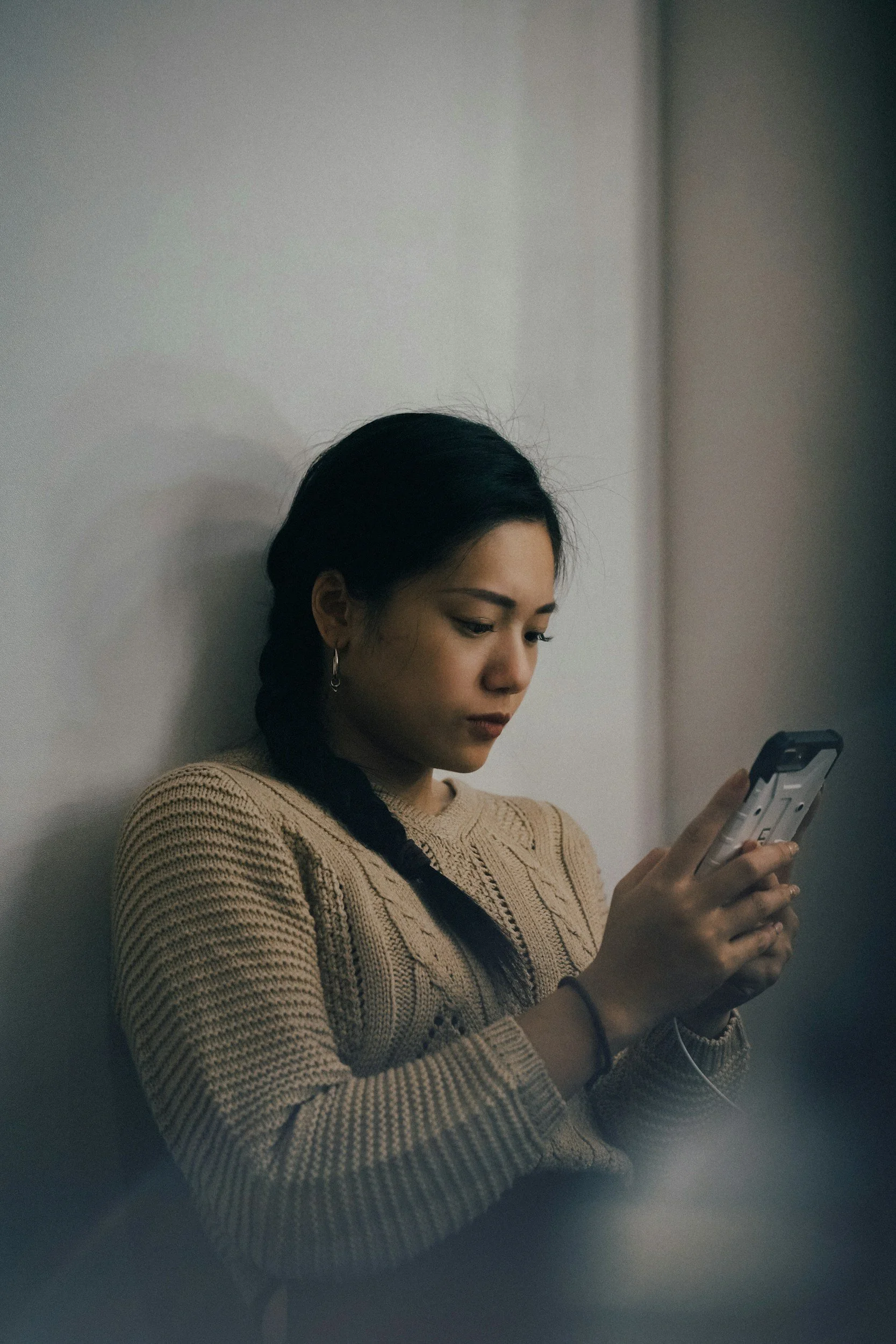
Image Credit: Unsplash, Chris Yang @chrisyangchrisfilm
Why the Pressure to Keep Up Feels So Intense
One of the biggest stressors teens talk to me about in counseling is the pressure to follow trends. Social media moves fast. One day it’s a dance, the next it’s a new way to style your hair, and if you’re not “in,” it can feel like you’re “out.” That pressure to fit in is totally normal—humans are wired to care about belonging, especially during the teenage years when you’re figuring out who you are.
But it’s okay to pause and ask yourself: “Am I doing this because it feels like me… or just so I won’t stand out?”
The Good Side: Using Social Media to Support Your Mental Health
Not all content is harmful. In fact, some teens find real comfort in accounts that talk openly about mental health, self-care, and coping strategies. There are amazing therapists, educators, and advocates out there sharing tips that can actually help you feel more empowered.
The trick is to be intentional. Curate your feed the way you’d decorate your room - with things that reflect you and make you feel safe, not judged. Learn how to spot misinformation or toxic “wellness” influencers who give advice without real training. Social media literacy is a skill, and it’s one that can help protect your mental health long-term.
So… What’s the Bottom Line?
Social media and mental health are definitely connected - but it’s not all bad or all good. For teens in St. Louis who are struggling with anxiety, our counseling work at Compassionate Counseling St. Louis often includes looking at the how and why of social media habits.
If you’re starting to notice that certain content is making you feel anxious, overwhelmed, or less like yourself, it’s okay to take a break. You don’t have to be available 24/7. Turn off notifications, skip the morning scroll, and give yourself time offline to recharge.
And if you’re not sure where to start—or you feel like social media is making your anxiety worse—it might be time to talk with a trusted adult or even reach out for professional support. Therapy is a space where you can unpack these things without judgment and learn new ways to manage stress.
At Compassionate Counseling St. Louis, we help teens navigate the stress of anxiety, identity, relationships, and yes—even social media. If you're looking for anxiety therapy in St. Louis, you're not alone—and we're here to help.
Curious to learn more? Wondering if counseling at Compassionate Counseling St. Louis could be a good fit for you or your child? Reach out to us at hello@compassionatecounselingstl.com. As child anxiety experts, we love working with kids, teens, college students and parents to help manage their anxiety, stress, and anger. Compassionate Counseling St. Louis is located in Clayton, MO and works with families by offering both in-person counseling and online therapy throughout St. Louis City, St. Louis County, Ladue, University City, Town and Country, Webster Groves, Creve Couer, Kirkwood, Richmond Heights, and Brentwood. We also provide online therapy Missouri -wide to teens and college students. You can set up your first free consult on this website, on our consultation page.
